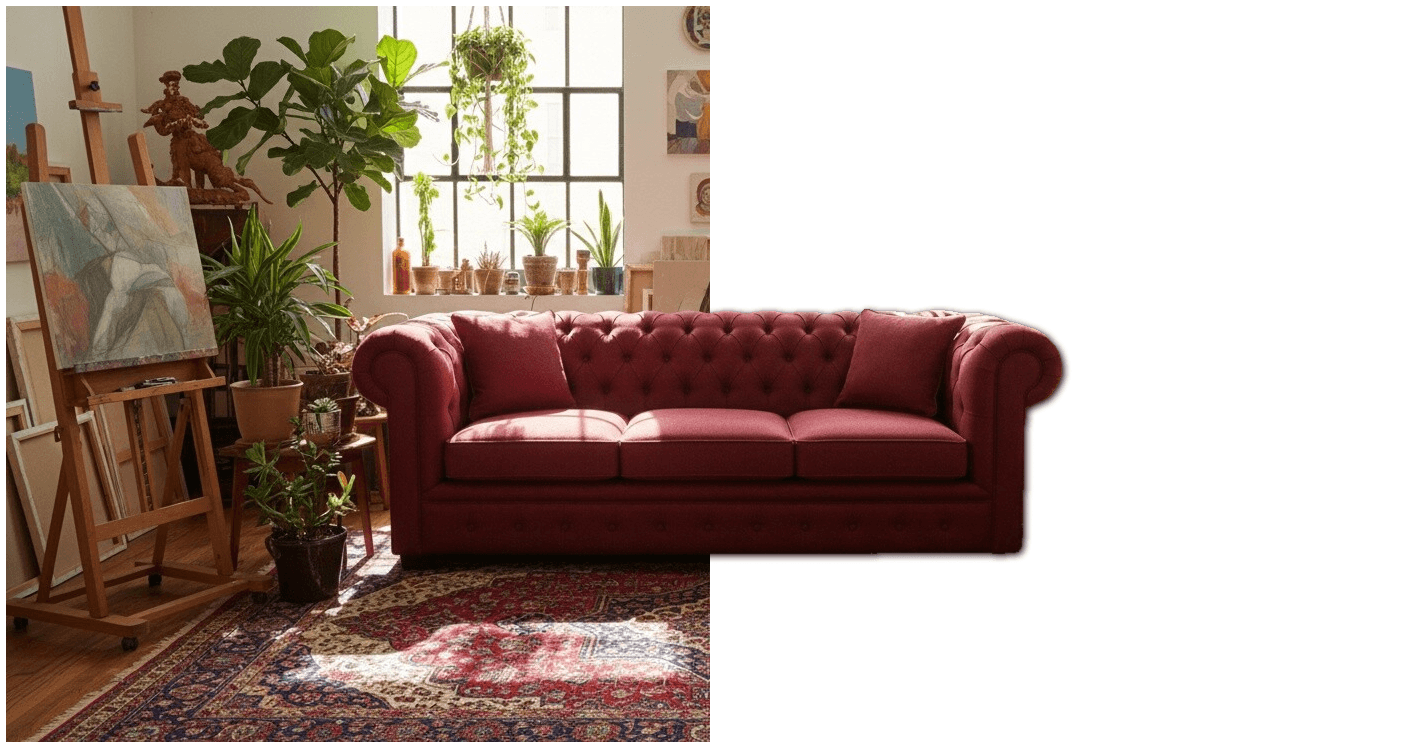

For twenty years, the “white background” product shot was the standard for eCommerce. It was clean, uniform, and operationally safe.
It is also becoming increasingly ineffective.
In a feed-based economy dominated by Pinterest, Instagram, and TikTok, a white background signals catalog, while a lifestyle image signals content. The data is now conclusive: consumers ignore the former and engage with the latter.
The challenge for merchants was never in understanding the value of lifestyle imagery. What stopped them was the cost of producing it.
This report outlines how the unit economics of visual assets have shifted and why tools like Lucid Modules Vision are essential for correcting your cost per acquisition (CPA).
The Context Gap in Modern Commerce
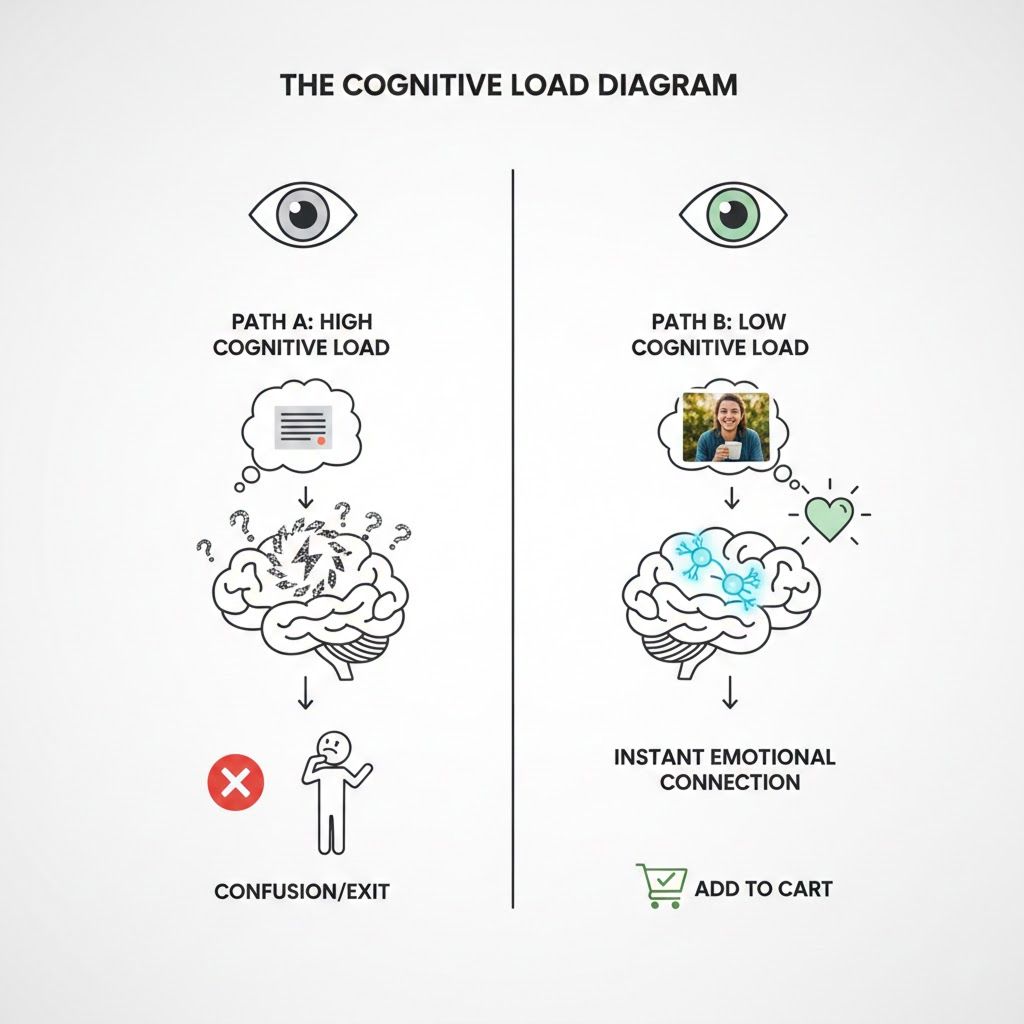
When a customer scrolls past a product on a white background, their brain has to perform a cognitive leap:
What would this look like in my home?
This leap creates friction. Every millisecond of imagination required is a drop in conversion probability.
IKEA Canada proved this in a definitive A/B test on Pinterest. They ran two identical ad sets on the same inventory. One set used standard white background images; the other placed the products in fully furnished rooms.
The results were not subtle. The lifestyle imagery delivered a 50% lower cost per action (CPA) and significantly higher click-through rates.
The takeaway is mechanical, not magical: when you supply the context, you remove the friction. You are no longer selling a chair (a commodity)—you are selling a finished living room (a solution).
The Production Bottleneck
If lifestyle imagery cuts ad costs by half, why isn’t every SKU on your site displayed in context?
Traditional photography does not scale.
For a catalog of 1,000 SKUs, producing high-quality lifestyle assets is a logistical nightmare. A single professional photoshoot involves studio rental, lighting technicians, photographers, and prop sourcing. Industry benchmarks price traditional lifestyle shoots between $500 and $2,000 per day, often yielding only a handful of usable assets.
For most CMOs, the math doesn’t work. You cannot justify spending $500 to photograph a product with a $50 margin. As a result, brands retreat to white backgrounds, accepting lower conversion rates to save on production costs.

Solving the Unit Economics with AI
Until recently, only giants like IKEA could afford this strategy at scale. Vision by Lucid Modules democratizes this capability by replacing physical studios with generative AI.
This is not about automating art but about asset liquidity. The Vision app allows a merchant to take a standard, existing product photo and place it into infinite contexts without the cost of shipping the product on the site.
The Old Workflow: Ship product → Rent Studio → Shoot → Retouch → Upload. (Time: 2 weeks. Cost: High.)
The Vision Workflow: Upload existing photo → Define Context (e.g., “Sunlit Scandinavian loft”) → Generate. (Time: 2 minutes. Cost: Negligible.)
By reducing the marginal cost of a lifestyle image to near zero, you can afford to have rich imagery for every SKU, not just your bestsellers.

Strategic Implementation
For leaders evaluating this technology, the implementation strategy should be phased and data-driven:
- Audit your “Silent” SKUs: Identify high-margin products with low engagement. These are often victims of the context gap—products that look boring in isolation but stunning in use.
- The “Vision” A/B Test: Do not overhaul your entire site immediately. Select 10 products. Use Lucid Modules Vision to generate three distinct environments for each (e.g., Morning Light, Evening Mood, Minimalist). Run these against your white-background control group in Meta or Pinterest ads.
- Measure efficiency, not just vanity: Look at CPA and Return on Ad Spend (ROAS). If the IKEA benchmark holds, you should see acquisition costs drop as relevance scores rise.
Next Steps
The era of the static catalog is ending. We are moving toward fluid commerce, where visual assets must be as dynamic as the algorithms they live on.
You no longer need a six-figure photography budget to compete with global furniture giants. You simply need to stop asking your customers to imagine your product and start showing it to them.
Stop paying the ‘context tax’ on your ad spend. Generate your first lifestyle asset today.
References: